


Knee pain is one of the most common medical complaints, affecting people across different age groups and lifestyles. A study published on ResearchGate reported that about 22-39% of the surveyed population experienced knee pain, with higher prevalence among women.
The causes of knee pain can vary widely. Age, physical activity, body weight, lifestyle, previous injuries, and genetics can all play a role. While some contributing factors can be managed through lifestyle and daily habits, others, such as injuries or previous predisposition, may be beyond your control.
Ayurveda takes a personalised approach to managing knee pain, focusing on understanding the individual and the underlying factors contributing to the condition. Unlike approaches that may primarily aim to provide short-term pain relief, Ayurvedic treatment focuses on addressing the contributing causes and supporting overall joint health through customised therapies, diet, and lifestyle practices.
In this blog, we’ll explore the different causes of knee pain, Ayurvedic approaches that help manage it, and practical lifestyle measures that can support healthier knees.
Knee pain can have many different causes, ranging from age-related changes to injuries and everyday habits. Some of the most common factors include:
Osteoarthritis: One of the most common causes of knee pain, osteoarthritis occurs when the cartilage that cushions the joints gradually wears down. The risk increases with age, although it can also develop due to previous injuries and other factors.
Injuries and Strains: Previous injuries, including sprains, ligament or meniscus tears, and other damage to the knee, can sometimes result in persistent or recurring pain.
Overuse: Repetitive activities such as running, squatting, climbing, or other movements that place repeated stress on the knee can contribute to pain and inflammation.
Excess Body Weight: Carrying excess body weight can increase the load placed on the knee joints and may also contribute to inflammation, increasing the risk of knee pain and joint problems.
Ayurvedic texts describe several conditions associated with joint pain, including Sandhivata, Amavata, and Vatarakta, which share similarities with conditions such as osteoarthritis, inflammatory arthritis, and gout, respectively. Ayurveda takes a holistic approach to managing knee and joint pain, focusing not only on relieving symptoms but also on understanding the underlying factors contributing to the condition.
As with many Ayurvedic treatments, the management of knee pain is guided by the balance of the body’s three doshas, Vata, Pitta, and Kapha. Vata, which is traditionally associated with movement and is composed of the elements air and space, is particularly associated with the joints and musculoskeletal system. An imbalance in Vata can contribute to symptoms such as pain, stiffness, and restricted movement in the joints. When Vata gets aggravated, it tends to cause dryness, pain, and instability in the joints.
Ayurvedic treatment is also personalised according to an individual’s Prakriti (body constitution), lifestyle, diet, and other contributing factors. Rather than following a single approach for everyone, the treatment plan is adapted to the individual’s condition and needs, which is the true path to healing.
A combination of therapies, herbal preparations, and lifestyle changes is recommended. In the next section, we’ll do a deeper dive into the different Ayurvedic therapies and approaches to treat knee pain.
There are a plethora of traditional Ayurvedic therapies that are well-known for their healing capabilities, specifically for joint pain. Let’s take a look at some of them.
The term Janu Basti comes from Janu, meaning ‘knee joint’, and Basti, meaning ‘to hold’. It is a traditional Ayurvedic therapy in which warm herbal oils are held over the knee joint for a specific period.
For the procedure, a thick, dough-like ring is prepared using black gram flour and placed around the knee to form an enclosure. Warm, medicated oil is then poured into this and maintained at a comfortable temperature for approximately 30-45 minutes. The oil is replaced from time to time to retain the recommended temperature. Once the therapy is complete, the enclosure is removed, and the treatment is followed by gentle massage and heat therapy.
Janu Basti is traditionally used to help relieve knee stiffness and discomfort, support circulation around the affected area, and promote joint flexibility. Rather than being viewed as a one-time treatment, it is often suggested as part of a series of sessions, depending on the individual’s condition.
While it may provide temporary symptomatic relief, the duration and extent of its benefits can vary from person to person.
Abhyanga, also known as Abhyangam, is a traditional Ayurvedic full-body oil massage used for various therapeutic and wellness purposes, including supporting joint health and easing musculoskeletal discomfort.
During the therapy, therapists gently apply warm medicated oils and massage them into the body using expert techniques. Abhyanga is usually followed by Swedana, an Ayurvedic herbal steam therapy, which uses gentle heat to relax the muscles and support circulation.
When used as part of an Ayurvedic approach to managing knee discomfort, Abhyanga may help ease muscle stiffness, reduce feelings of joint discomfort, improve circulation, and promote relaxation and mobility.
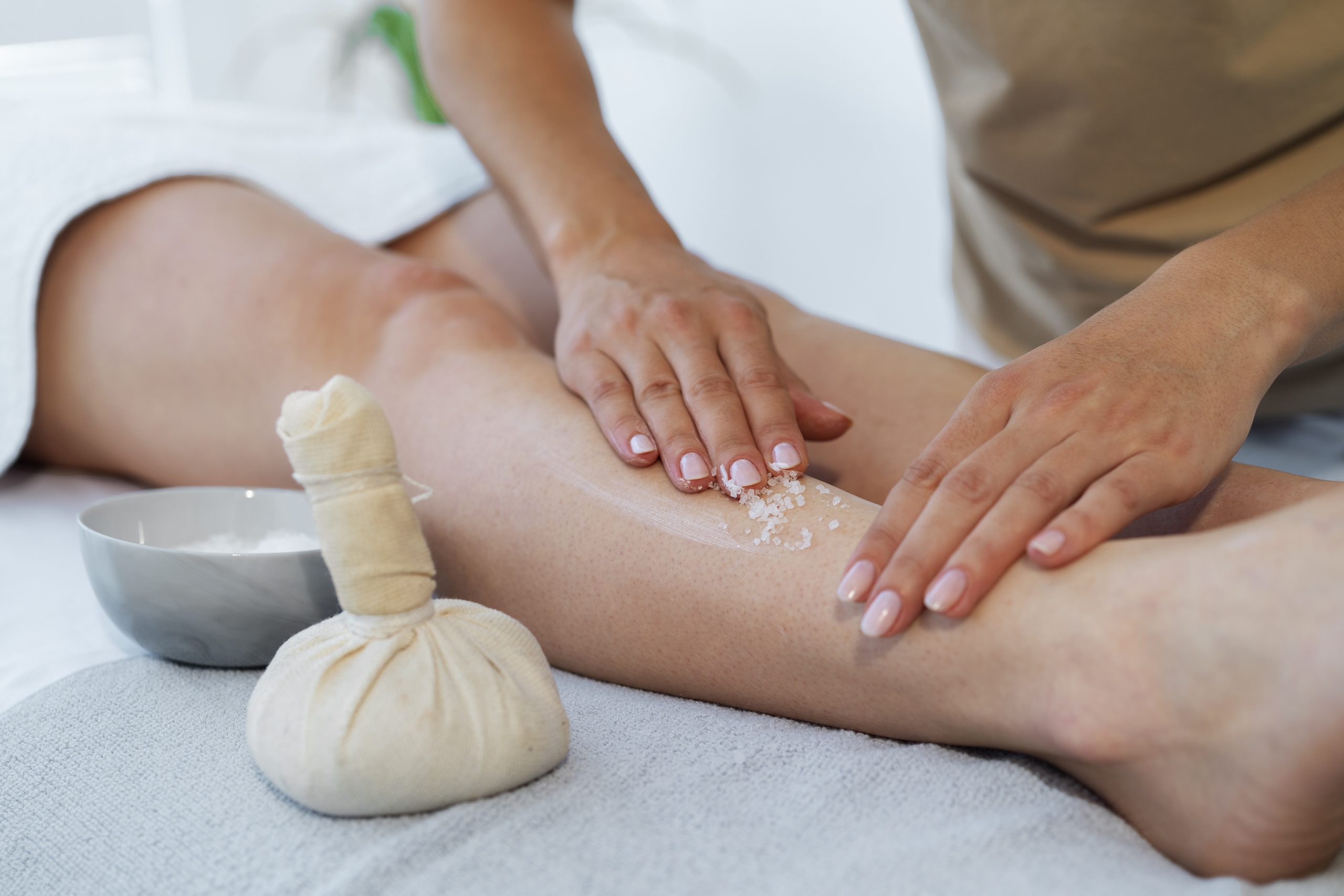
Kizhi is a traditional Ayurvedic therapy that combines therapeutic massage with heat application and is commonly used to help manage joint pain, stiffness, and muscular discomfort. It uses cloth bundles or pouches filled with ingredients such as cooked rice, medicinal leaves, herbs, or herbal powders.
The bundles are warmed using medicated oils or other medicinal formulations and are then gently and rhythmically pressed or applied over the body, using a customised technique.
Kizhi may help ease muscle and joint stiffness, promote relaxation, support flexibility, and improve circulation in the treated area.
Njavarakizhi, Podikizhi, and Elakizhi are some of the different types of Kizhi therapies used in Ayurveda.
These are just a few of the many Ayurvedic therapies that are used for treating joint and knee pain. Pizhichil and Panchakarma are also popular treatment courses.
While appropriate treatment plays an important role in managing knee pain, everyday lifestyle habits can also support joint health and overall recovery. Incorporating simple, sustainable practices into your routine can help you stay active while avoiding unnecessary strain on the knees.
Here are some practices to consider:
Along with an active lifestyle, maintaining a balanced and nutritious diet can support overall health and well-being. Rather than following restrictive diets, focus on consistent, wholesome eating habits.
Whether it is movement, rest, or nutrition, consistency matters. Small, sustainable changes incorporated into your daily routine can support long-term joint health and complement an appropriate treatment plan.
Knee and joint pain can have a range of underlying causes, and Ayurveda takes an individualised approach to understanding the factors that may be contributing to your symptoms. Based on your individual condition, constitution, and needs, a treatment plan incorporating therapies ranging from Abhyangam and Kizhi to Panchakarma, along with appropriate lifestyle and dietary guidance.
At Ayushman Ayurveda, our treatments are personalised to each individual’s needs and rooted in traditional Ayurvedic principles and practices. Take the first step towards better joint health. Consult Ayushman Ayurveda to begin a personalised treatment journey.
1. Can Ayurveda help with chronic knee pain?
Ayurveda may help manage chronic knee pain through personalized therapies, lifestyle changes, diet, yoga, and other supportive approaches. The treatment depends on the underlying cause and individual condition.
2. What Ayurvedic therapies are used for knee pain?
Common Ayurvedic therapies used for knee pain include Janu Basti, Abhyanga, Kizhi, Pizhichil, and selected Panchakarma therapies. The appropriate therapy is determined after an Ayurvedic assessment.
3. Is Janu Basti good for knee pain?
Janu Basti is an Ayurvedic therapy in which warm herbal oil is retained over the knee area for a specific period. It is traditionally used to support joint comfort, mobility, and stiffness associated with certain knee conditions.
4. Can Ayurveda help with knee pain caused by arthritis?
Ayurvedic treatment may be used as a supportive approach for managing symptoms associated with certain types of arthritis, including knee discomfort and stiffness. Treatment is generally personalized according to the person’s symptoms and condition.


